
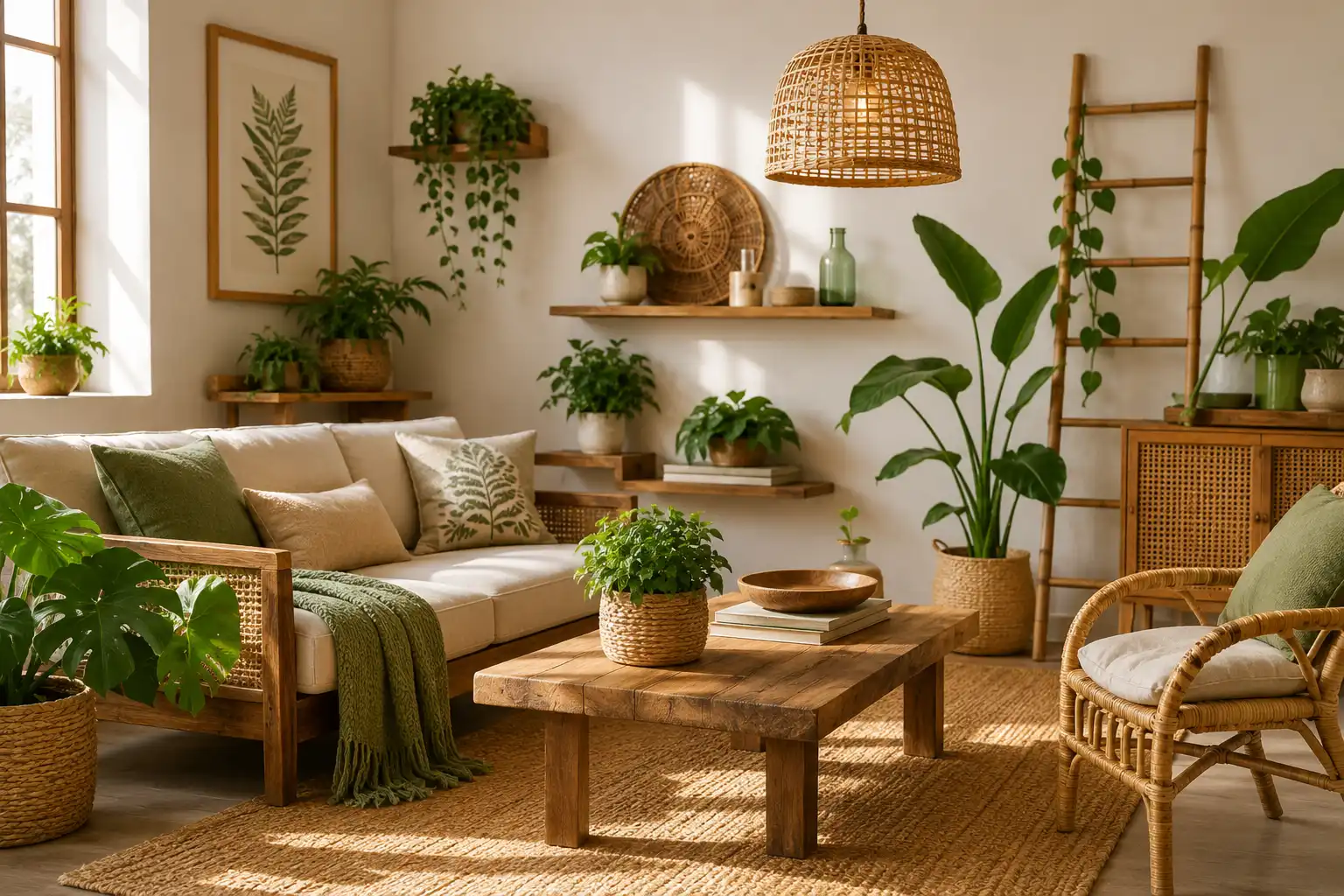
Creating an eco-friendly home doesn’t mean sacrificing style or comfort. In fact, sustainable home decor combines beautiful design with environmentally responsible choices, helping you create a healthier living space while reducing your environmental impact. From choosing natural materials to decorating with reclaimed furniture and energy-efficient accessories, there are countless ways to make your home both stylish and sustainable.
Whether you’re redesigning a single room or embracing a greener lifestyle throughout your home, these practical ideas will help you build a space that’s beautiful, functional, and kind to the planet.
Understanding Eco-Friendly Materials
One of the first steps toward sustainable home decorating is choosing materials that have minimal environmental impact. Eco-friendly materials are renewable, recycled, biodegradable, or responsibly sourced, making them a better alternative to synthetic or disposable products.
Bamboo
Bamboo is one of the most sustainable materials available because it grows rapidly without requiring excessive water or pesticides.
Common bamboo home products include:
- Furniture
- Shelving
- Cutting boards
- Flooring
- Storage baskets
- Window blinds
Its durability and natural appearance make it suitable for both modern and rustic interiors.
Reclaimed Wood
Reclaimed wood comes from old buildings, barns, or previously used furniture.
Benefits include:
- Reduces deforestation
- Prevents waste
- Adds unique character
- Extremely durable
- Creates warm natural textures
Each reclaimed wood piece has its own distinctive grain and history.
Organic Cotton
Unlike conventional cotton, organic cotton is grown without harmful pesticides and synthetic fertilizers.
Popular uses include:
- Bedding
- Curtains
- Throw blankets
- Pillow covers
- Table linens
Organic textiles are often softer, safer, and better for sensitive skin.
Linen
Made from flax plants, linen requires fewer resources than many other fabrics.
Why homeowners love linen:
- Highly breathable
- Long-lasting
- Biodegradable
- Naturally elegant
- Perfect for every season
Linen curtains and bedding create a relaxed, timeless look.
Glass
Glass is endlessly recyclable and ideal for reducing plastic waste.
Common glass decor includes:
- Storage jars
- Vases
- Candle holders
- Pendant lights
- Decorative bottles
Unlike plastic, glass doesn’t absorb odors or release harmful chemicals.
Natural Stone
Marble, slate, granite, and travertine are durable materials that can last for decades when properly maintained.
Natural stone is often used for:
- Countertops
- Decorative trays
- Coffee tables
- Flooring
- Bathroom accessories
Rattan and Wicker
These renewable natural fibers add warmth and texture while remaining lightweight and durable.
Popular pieces include:
- Chairs
- Storage baskets
- Mirrors
- Pendant lights
- Plant stands
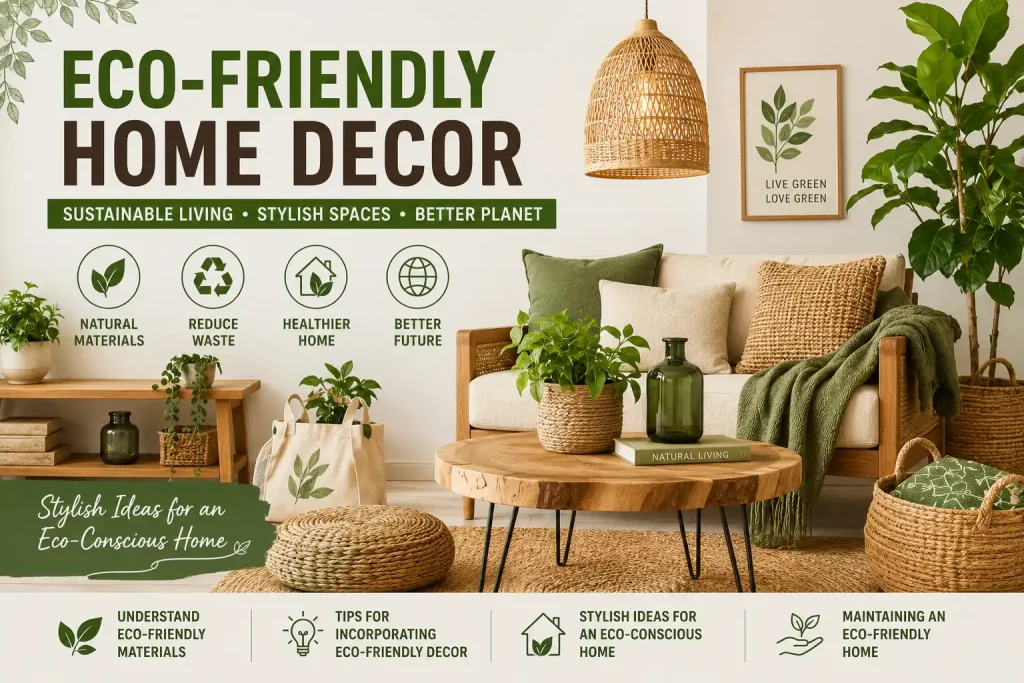
Tips for Incorporating Eco-Friendly Decor
Making your home more sustainable doesn’t require replacing everything overnight. Gradual changes are both affordable and environmentally responsible.
Buy Quality Instead of Quantity
Choose well-made furniture and decor that will last for years rather than inexpensive items that need frequent replacement.
Investing in durability ultimately saves money while reducing waste.
Decorate with Houseplants
Indoor plants naturally improve your home’s appearance while creating a fresher environment.
Popular low-maintenance plants include:
- Snake Plant
- Pothos
- ZZ Plant
- Spider Plant
- Peace Lily
- Rubber Plant
Plants also add color and texture without increasing plastic consumption.
Use LED Lighting
LED bulbs consume significantly less electricity than traditional incandescent bulbs while lasting much longer.
Benefits include:
- Lower energy bills
- Reduced carbon footprint
- Longer lifespan
- Less heat production
Repurpose Existing Furniture
Instead of buying new furniture, consider:
- Repainting cabinets
- Refinishing wood tables
- Updating drawer handles
- Reupholstering chairs
- Restaining shelves
Refreshing old furniture extends its life and reduces landfill waste.
Choose Natural Textiles
Decorate with sustainable fabrics such as:
- Linen
- Organic cotton
- Hemp
- Wool
- Jute
Natural fibers add warmth while avoiding synthetic materials derived from petroleum.
Minimize Plastic Decor
Instead of plastic accessories, choose items made from:
- Wood
- Ceramic
- Glass
- Stone
- Metal
- Bamboo
These materials generally last longer and create a more timeless appearance.
Shop Vintage and Secondhand
Vintage furniture often features higher-quality craftsmanship than many mass-produced alternatives.
Shopping secondhand:
- Reduces waste
- Saves money
- Supports local businesses
- Creates one-of-a-kind interiors
Stylish Ideas for an Eco-Conscious Home
Sustainability and style can go hand in hand. Here are some inspiring decorating ideas for every room.
Create a Natural Color Palette
Earth-inspired colors create a calming atmosphere.
Popular shades include:
- Sage green
- Warm beige
- Soft white
- Sand
- Olive
- Terracotta
- Clay
- Light gray
These timeless colors pair beautifully with natural materials.
Mix Different Natural Textures
Layering textures creates depth and warmth.
Combine materials such as:
- Linen
- Wood
- Wool
- Bamboo
- Stone
- Rattan
- Cotton
The result is a cozy and inviting living space.
Decorate with Handmade Pieces
Handcrafted decor often supports local artisans while reducing the environmental impact of mass production.
Ideas include:
- Handmade pottery
- Woven baskets
- Ceramic vases
- Wooden bowls
- Artisan wall art
These unique pieces add personality to your home.
Display Indoor Plants Creatively
Arrange plants on:
- Floating shelves
- Window sills
- Hanging planters
- Plant stands
- Bookshelves
Grouping plants together creates an attractive indoor garden effect.
Choose Multi-Functional Furniture
Furniture that serves multiple purposes reduces unnecessary consumption.
Examples include:
- Storage ottomans
- Extendable dining tables
- Sofa beds
- Storage benches
- Nesting tables
Maximize Natural Light
Natural sunlight reduces electricity usage while making rooms appear larger and more welcoming.
Simple improvements include:
- Sheer curtains
- Mirrors
- Light-colored walls
- Minimal window coverings
Decorate with Recycled Accessories
Look for products made from recycled materials, including:
- Recycled glass vases
- Recycled metal sculptures
- Reclaimed wood shelves
- Upcycled decorative trays
These accessories give discarded materials a second life.
Room-by-Room Eco-Friendly Decor Ideas
Living Room
- Organic cotton throw pillows
- Bamboo coffee table
- LED floor lamp
- Reclaimed wood shelves
- Jute area rug
Bedroom
- Organic cotton bedding
- Linen curtains
- Natural wood nightstands
- Wool throw blanket
- Indoor plants
Kitchen
- Glass storage jars
- Bamboo utensils
- Refillable soap dispensers
- Compost bin
- Reusable cloth towels
Bathroom
- Bamboo toothbrush holder
- Glass soap dispenser
- Organic cotton towels
- Wooden bath tray
- Reusable storage baskets
Maintaining an Eco-Friendly Home
Creating a sustainable home is an ongoing process. Proper maintenance helps your eco-friendly choices last longer and continue benefiting both your household and the environment.
Clean with Natural Products
Replace harsh chemical cleaners with environmentally friendly alternatives.
Popular options include:
- White vinegar
- Baking soda
- Lemon juice
- Plant-based cleaning products
These solutions effectively clean while reducing chemical pollution.
Repair Instead of Replacing
Whenever possible:
- Repair furniture
- Tighten loose hardware
- Repaint damaged surfaces
- Replace small parts
- Sew torn fabrics
Extending product life reduces waste and saves money.
Reduce Energy Consumption
Simple habits make a difference:
- Turn off lights when leaving a room.
- Unplug unused electronics.
- Use smart power strips.
- Wash clothes in cold water.
- Air dry laundry when possible.
Recycle Correctly
Separate recyclable materials according to local guidelines.
Common recyclable materials include:
- Glass
- Aluminum
- Paper
- Cardboard
- Certain plastics
Proper recycling prevents valuable materials from ending up in landfills.
Declutter Responsibly
Instead of throwing away unwanted items:
- Donate usable furniture.
- Sell quality decor.
- Recycle damaged materials.
- Repurpose old household items.
Responsible decluttering keeps useful products in circulation.
Refresh Instead of Replacing
A room can feel completely new with small updates such as:
- Changing pillow covers
- Rearranging furniture
- Adding fresh plants
- Swapping artwork
- Painting walls
These affordable improvements reduce unnecessary consumption.
Quick Sustainability Checklist
| Action | Environmental Benefit |
|---|---|
| Buy reclaimed wood furniture | Reduces deforestation |
| Choose LED bulbs | Saves energy |
| Use organic textiles | Reduces chemical use |
| Shop secondhand | Minimizes waste |
| Decorate with plants | Improves indoor environment |
| Recycle household materials | Conserves natural resources |
| Repair damaged furniture | Extends product lifespan |
| Use reusable storage containers | Reduces plastic waste |
Final Thoughts
Designing an eco-friendly home is about making thoughtful choices that balance style, comfort, and sustainability. By selecting natural materials, investing in durable furniture, embracing reusable products, and maintaining energy-efficient habits, you can create a home that looks beautiful while supporting a healthier planet.
Remember that sustainability isn’t about achieving perfection overnight. Every small improvement—whether it’s adding houseplants, choosing organic textiles, repurposing old furniture, or reducing plastic use—contributes to a greener lifestyle. Over time, these simple changes create a home that’s not only visually appealing but also environmentally responsible, healthier for your family, and built to stand the test of time.