
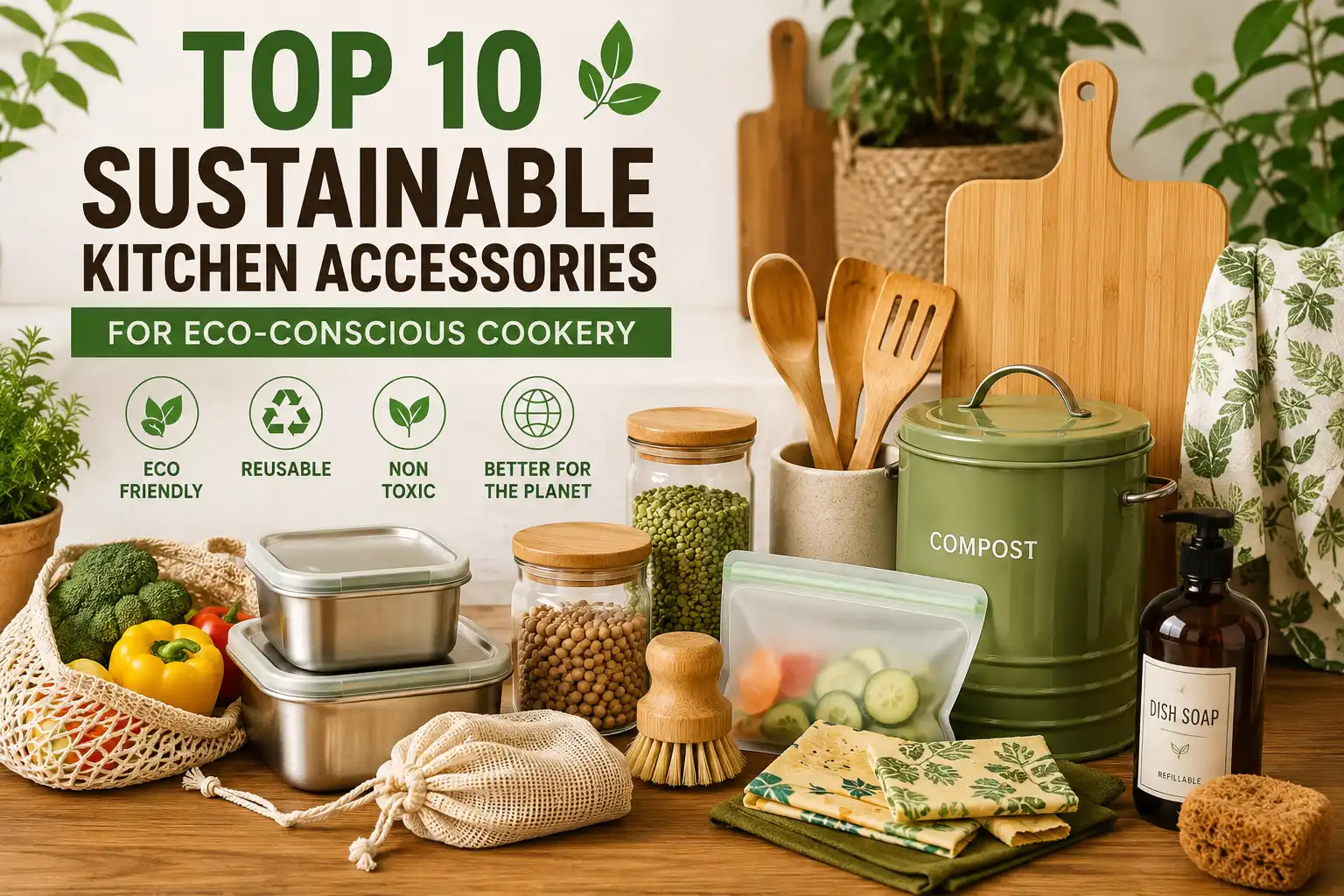
Creating an eco-friendly kitchen doesn’t require a complete renovation. In fact, small, thoughtful changes—like replacing disposable products with reusable alternatives—can significantly reduce waste, lower your environmental impact, and even save money over time. Sustainable kitchen accessories are designed to be durable, reusable, and made from environmentally friendly materials, making them a smart choice for every home cook.
Whether you’re just beginning your sustainability journey or looking to upgrade your kitchen with greener products, these accessories can help you cook, store, and clean more responsibly.
Why Choose Sustainable Kitchen Accessories?
Switching to sustainable kitchen accessories is one of the easiest ways to make your home more environmentally friendly. These products are built to last longer, reduce reliance on single-use plastics, and often use renewable or recycled materials.
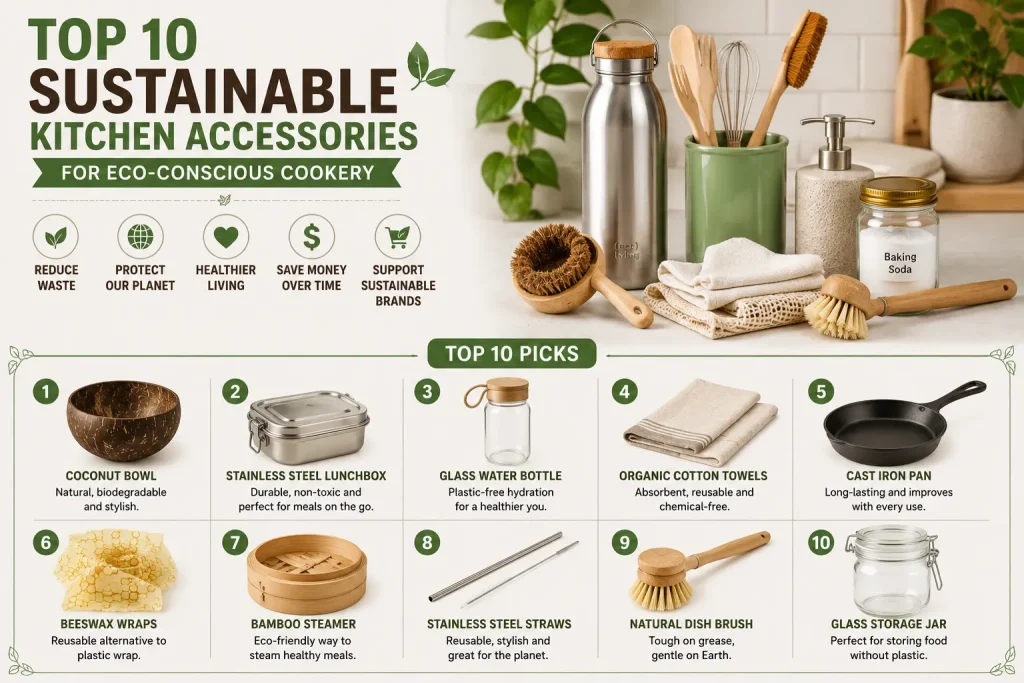
Reduce Plastic Waste
Many traditional kitchen items, such as plastic storage bags, disposable utensils, and cling wrap, are used only once before ending up in landfills or oceans. Replacing them with reusable alternatives helps reduce plastic pollution and minimizes household waste.
Save Money Over Time
Although eco-friendly kitchen products may cost slightly more upfront, they usually last much longer than disposable alternatives. Investing in durable accessories means you’ll spend less replacing worn-out items.
Create a Healthier Kitchen
Many sustainable products are made without harmful chemicals like BPA, phthalates, or toxic coatings. Choosing natural materials such as bamboo, stainless steel, and glass can create a healthier food preparation environment.
Support Sustainable Manufacturing
Many eco-conscious brands prioritize ethical sourcing, renewable materials, and environmentally responsible production methods. Purchasing these products supports companies committed to protecting the planet.
Reduce Your Carbon Footprint
Using reusable products reduces manufacturing demand for disposable goods, lowering energy consumption and greenhouse gas emissions associated with production and transportation.
Top 10 Sustainable Kitchen Accessories
Here are ten eco-friendly kitchen essentials that combine functionality, durability, and sustainability.
1. Bamboo Cutting Board
A bamboo cutting board is one of the best sustainable upgrades for any kitchen.
Benefits
- Renewable material
- Lightweight yet durable
- Naturally resistant to moisture
- Gentle on knife blades
- Stylish appearance
Buying Tips
Choose boards made from FSC-certified bamboo and finished with food-safe natural oils.
2. Reusable Silicone Food Storage Bags
Replace disposable plastic bags with reusable silicone storage bags.
Why They’re Great
- Leakproof
- Freezer safe
- Dishwasher safe
- Microwave safe
- Reusable hundreds of times
Perfect for meal prep, leftovers, snacks, and travel.
3. Stainless Steel Food Storage Containers
Stainless steel containers provide a long-lasting alternative to plastic food containers.
Advantages
- Rust resistant
- BPA-free
- Extremely durable
- Easy to clean
- Ideal for lunches and leftovers
These containers can last for decades with proper care.
4. Beeswax Food Wraps
Beeswax wraps replace single-use plastic wrap for storing fruits, vegetables, bread, and sandwiches.
Benefits
- Reusable
- Compostable
- Naturally antibacterial
- Flexible and easy to use
Simply wash with cool water and mild soap after each use.
5. Compost Bin
Kitchen compost bins make it easy to collect food scraps before transferring them to an outdoor compost pile or municipal composting service.
Compostable Items
- Fruit peels
- Vegetable scraps
- Coffee grounds
- Tea bags
- Eggshells
Composting reduces landfill waste while creating nutrient-rich soil.
6. Wooden Cooking Utensils
Wooden spoons, spatulas, and serving tools are biodegradable and safe for non-stick cookware.
Why Choose Wood?
- Doesn’t scratch cookware
- Comfortable to hold
- Long-lasting
- Natural appearance
- Compostable at the end of their life
Hardwoods like beech, maple, and olive wood are especially durable.
7. Glass Storage Jars
Glass jars help organize dry goods while eliminating disposable packaging.
Perfect for storing:
- Rice
- Pasta
- Beans
- Flour
- Sugar
- Coffee
- Nuts
- Spices
Glass doesn’t absorb odors or stains, making it ideal for long-term food storage.
8. Reusable Produce Bags
Instead of using plastic bags at the grocery store, switch to reusable mesh produce bags.
Benefits
- Washable
- Lightweight
- Breathable
- Durable
- Easy to carry
They’re perfect for fruits, vegetables, and bulk foods.
9. Compostable Dish Sponges
Traditional kitchen sponges contain plastic that sheds microplastics over time.
Eco-friendly alternatives include:
- Cellulose sponges
- Coconut fiber scrubbers
- Loofah sponges
- Bamboo scrub brushes
These options clean effectively while being biodegradable.
10. Refillable Soap Dispenser
A refillable soap dispenser reduces plastic waste from single-use soap bottles.
Choose materials such as:
- Glass
- Stainless steel
- Ceramic
Buying soap refills instead of new bottles helps minimize packaging waste.
Comparison Table
| Kitchen Accessory | Eco-Friendly Material | Reusable | Expected Lifespan |
|---|---|---|---|
| Bamboo Cutting Board | Bamboo | ✔ | 5–10 years |
| Silicone Storage Bags | Food-grade Silicone | ✔ | Several years |
| Stainless Steel Containers | Stainless Steel | ✔ | Decades |
| Beeswax Wraps | Cotton & Beeswax | ✔ | 1 year or more |
| Compost Bin | Stainless Steel or Plastic | ✔ | Many years |
| Wooden Utensils | Hardwood | ✔ | 5–10 years |
| Glass Storage Jars | Glass | ✔ | Lifetime |
| Produce Bags | Organic Cotton or Mesh | ✔ | Several years |
| Compostable Sponge | Natural Fiber | Limited | 1–3 months |
| Soap Dispenser | Glass or Ceramic | ✔ | Many years |
How to Incorporate These Accessories into Your Kitchen
Making your kitchen more sustainable doesn’t have to happen overnight. Gradual changes are often easier to maintain and more budget-friendly.
Start with Everyday Essentials
Focus on replacing the items you use most frequently, such as cutting boards, food storage containers, and reusable shopping bags.
Replace Disposable Products Gradually
Instead of throwing away usable items, replace them as they wear out. This approach reduces waste while spreading out the cost of upgrading.
Organize Your Pantry
Transfer dry ingredients into reusable glass jars. Not only does this reduce packaging waste, but it also keeps your pantry neat and makes ingredients easier to find.
Reduce Single-Use Plastics
Replace common disposable products with reusable alternatives:
- Plastic wrap → Beeswax wraps
- Plastic bags → Silicone storage bags
- Plastic bottles → Glass containers
- Disposable towels → Reusable cloth towels
Small swaps can make a big environmental impact over time.
Build Sustainable Habits
Eco-conscious cooking is about consistency. Wash reusable items properly, compost food scraps when possible, and choose products designed to last for years rather than months.
Additional Tips for Eco-Conscious Cookery
Creating a greener kitchen goes beyond buying sustainable accessories. Your daily habits also play an important role in reducing waste and conserving resources.
Buy Only What You Need
Planning meals before shopping helps reduce food waste and prevents unnecessary purchases.
Choose Local and Seasonal Produce
Locally grown foods often require less transportation, reducing carbon emissions while supporting nearby farmers.
Cook Larger Batches
Preparing multiple meals at once saves energy and makes meal planning more convenient throughout the week.
Store Food Properly
Using airtight reusable containers helps keep food fresh longer, reducing spoilage and food waste.
Reduce Water Waste
Wash fruits and vegetables in a bowl instead of running water continuously, and only run the dishwasher with full loads.
Recycle Responsibly
Separate recyclable materials such as glass, aluminum, cardboard, and paper according to your local recycling guidelines.
Repair Instead of Replace
Whenever possible, repair kitchen tools rather than replacing them. Sharpen knives, refinish wooden cutting boards, and maintain cookware to extend their lifespan.
Support Sustainable Brands
Look for companies that prioritize renewable materials, recyclable packaging, ethical labor practices, and transparent environmental commitments.
Final Thoughts
Building an eco-friendly kitchen doesn’t require expensive renovations or dramatic lifestyle changes. By replacing disposable products with durable, reusable alternatives, you can significantly reduce household waste while creating a healthier and more organized cooking space.
Start with one or two sustainable kitchen accessories—such as a bamboo cutting board, reusable silicone storage bags, or glass food containers—and gradually expand your collection as older items wear out. Combined with mindful cooking habits like composting, reducing food waste, and choosing reusable products, these small changes can have a lasting positive impact on both your home and the environment.
Every sustainable choice, no matter how small, brings you one step closer to a greener kitchen and a more eco-conscious lifestyle.